
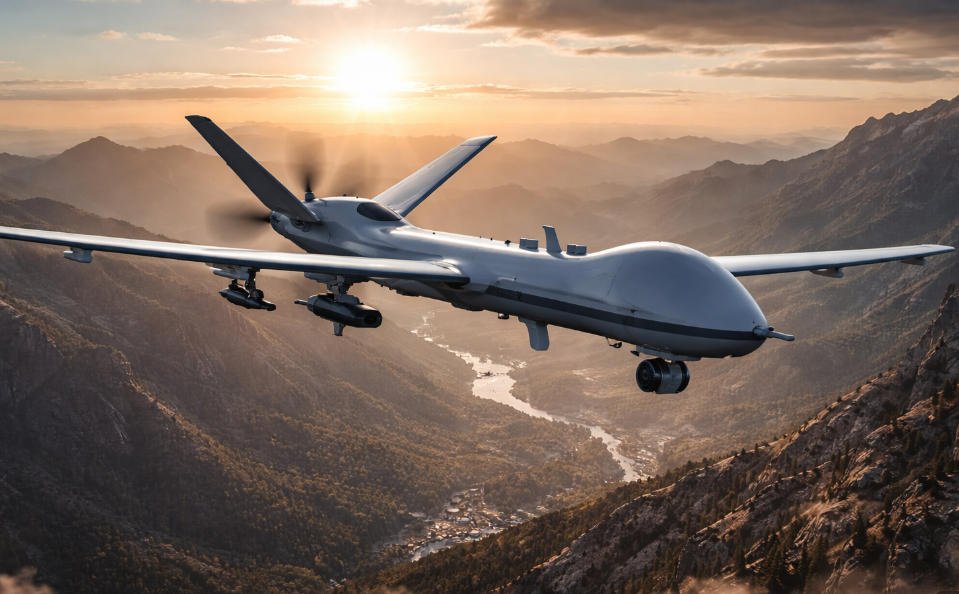
Unmanned Aerial Vehicles (UAVs) have become indispensable assets in Intelligence, Surveillance, and Reconnaissance (ISR) operations. Whether used by military forces, law enforcement, or commercial entities, success in ISR missions hinges on propulsion systems that can meet demanding operational requirements. This article explores the key UAV propulsion requirements for ISR missions, outlining how propulsion design influences endurance, efficiency, stealth, and mission success.
Introduction to ISR UAV Propulsion Needs
ISR missions require UAVs to sustain long durations in the air while collecting high-value data over wide areas. Unlike short-duration tactical flights, ISR missions emphasize extended endurance, consistent power delivery, and low acoustic signature to avoid detection.
A propulsion system for ISR must therefore be reliable, efficient, and capable of supporting various mission profiles without compromising performance.
Core Propulsion Requirements for ISR UAVs
1 Extended Endurance and Flight Duration
Endurance is paramount in ISR missions. Propulsion systems must enable:
- Long loiter times for continuous observation
- High fuel efficiency or power management
- Reduced energy consumption during low-speed cruise
Long flight durations minimize the need for frequent takeoffs/landings, reduce operational costs, and increase time-on-target.
Key Considerations:
- Propulsion design impacts energy utilization
- Aerodynamic efficiency and lightweight power systems enhance mission duration
2 Efficient Power Systems
Efficient energy conversion is a fundamental requirement for ISR UAV propulsion. Efficiency affects everything from mission range to payload capabilities.
Types of UAV Propulsion Systems:
- Electric propulsion – ideal for low-noise, short-to-medium ISR missions
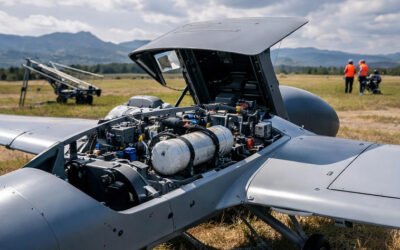
- Internal combustion engines (ICE) – preferred for longer endurance and greater power output
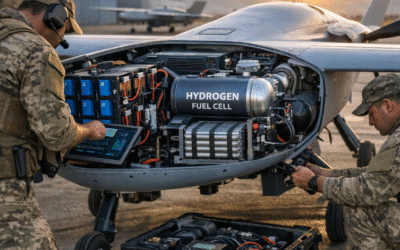
- Hybrid propulsion systems – combine electric and fuel engines for balanced performance
Each propulsion type offers unique advantages, but ISR missions often benefit from hybrid configurations that balance endurance and efficiency.
3 High Reliability and Redundancy
ISR missions are frequently conducted in remote or contested environments where system failures are unacceptable.
Essential Reliability Features:
- Redundant propulsion components
- Fault-tolerant design
- Real-time system diagnostics
Multiple redundant elements ensure that, even if one component fails, the UAV remains operational, maintaining mission integrity.
4 Low Acoustic and Thermal Signature
Stealth is critical in ISR operations, especially in military or law enforcement contexts.
Signature Reduction Strategies:
- Quiet electric motors
- Propeller design optimizations
- Hybrid systems that minimize noise during surveillance phases
A propulsion system with low acoustic and thermal signatures helps prevent detection by adversaries, enhancing operational success.
5 Scalability and Modular Design
Modern UAV missions often require flexibility. A scalable propulsion system allows integration with different UAV platforms and payloads, enabling:
- Easy upgrades
- Interchangeable power modules
- Adaptation to mission-specific requirements
Modularity reduces maintenance time and improves lifecycle performance.
Performance Metrics for ISR Propulsion Systems
For UAV propulsion systems tailored to ISR missions, the following performance metrics are crucial:
Endurance
Measured in flight hours — directly linked to energy capacity and power efficiency.
Power-to-Weight Ratio
Ensures UAVs can carry ISR payloads without performance degradation.
Fuel or Energy Efficiency
Determines mission duration and operational cost.
System Reliability
Indicated by Mean Time Between Failure (MTBF) and fault tolerance.
Electric vs Hybrid vs Fuel-Based Propulsion for ISR
| Propulsion Type | Endurance | Noise | Payload Capacity | Best Use Cases |
|---|---|---|---|---|
| Electric | Moderate | Low | Light | Covert ISR, short range |
| Hybrid | High | Moderate | Medium | Long-duration ISR |
| Fuel (ICE) | Very High | High | Heavy | Strategic, high-power missions |
Electric propulsion excels in stealth but is limited by battery energy density. Hybrid systems significantly extend endurance while balancing noise and efficiency. Traditional fuel engines remain viable for heavy, extended missions where noise is less critical.
Future Outlook: Next-Gen Propulsion for ISR UAVs
Advances in materials, battery technology, and fuel systems will continue to shape ISR UAV propulsion requirements:
- Higher efficiency energy storage (e.g., solid-state batteries)
- More compact hybrid systems
- AI-optimized power management for real-time efficiency gains
These innovations will push UAV capabilities further, enabling longer, smarter, and more reliable ISR operations.
In ISR missions, propulsion systems define the boundaries of performance, endurance, and mission success. UAV propulsion requirements for ISR missions emphasize:
- Endurance and energy efficiency
- Reliable, redundant design
- Low acoustic and thermal signatures
- Scalability and modularity
Optimizing UAV propulsion systems is not just about power — it’s about sustaining intelligence, enhancing situational awareness, and delivering decisive operational advantage.

0 Comments