
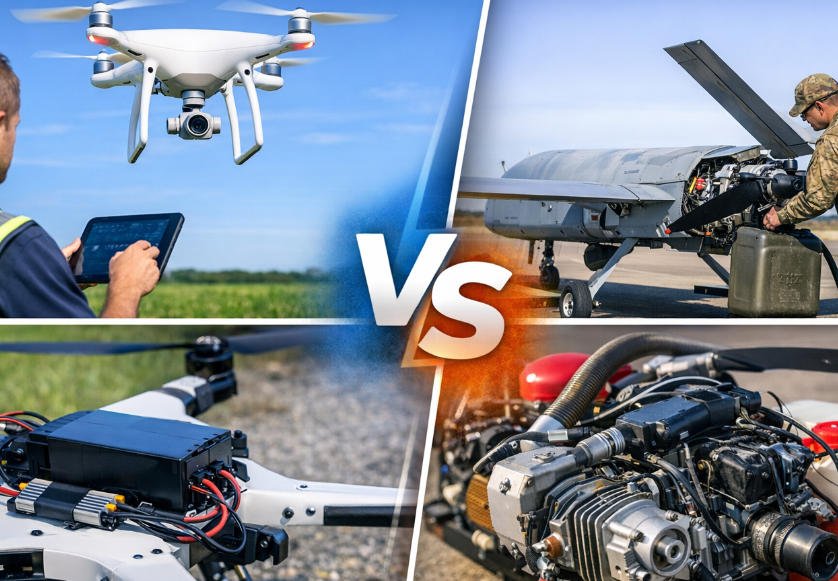
In the rapidly evolving unmanned aerial vehicle (UAV) industry, choosing the right propulsion system is a critical decision that directly impacts performance, mission capability, cost efficiency, and environmental footprint. As UAV applications expand—spanning commercial delivery, agriculture, emergency response, and defense—engineers and operators are often faced with a fundamental question: Should a UAV be powered by an electric system or a fuel-based propulsion system?
This in-depth comparison of electric vs fuel-based UAV propulsion systems examines both technologies from multiple perspectives, including performance metrics, operational costs, maintenance requirements, environmental considerations, and practical mission suitability. Whether you are a UAV designer, buyer, or enthusiast, this article will help you make an informed choice aligned with your specific needs.
1. Basics of UAV Propulsion Systems
Before diving into comparison, it’s essential to understand what defines each propulsion type and how they function.
Electric UAV Propulsion Systems
Electric UAV propulsion systems rely on electric motors powered by onboard batteries—usually lithium-ion, lithium polymer, or emerging solid-state cells. These systems are known for their simplicity and relatively quiet operation.
Key Components:
- Electric motor(s)
- Battery pack (primary energy storage)
- Electronic speed controller (ESC)
- Power management unit
Fuel-Based UAV Propulsion Systems
Fuel-based systems usually employ internal combustion engines running on gasoline, diesel, or specialized fuels such as heavy fuels (JP-8) used in military UAVs.
Key Components:
- Internal combustion engine
- Fuel tank
- Propeller and reduction gearbox (if needed)
- Engine control and monitoring systems
2. Performance Comparison
A. Thrust & Power Density
Electric Systems:
Electric motors offer high torque at low speeds and precise control, making them excellent for multirotor and VTOL (Vertical Take-Off and Landing) UAVs. However, their power is ultimately limited by battery energy density.
Fuel Systems:
Fuel engines typically provide higher sustained power for extended periods, giving fuel-based UAVs a higher power-to-weight ratio in larger platforms.
Winner:
For high-power, extended flights, fuel-based systems generally offer better performance. For agile, lower-weight, short-range missions, electric systems excel.
B. Endurance & Range
Electric UAVs:
Battery limitations significantly restrict flight duration—often between 20 to 60 minutes for most commercial drones. Research in advanced battery chemistries and energy-dense technologies is improving this, but electric systems remain constrained compared to liquid fuel.
Fuel-Powered UAVs:
With high energy density fuels, these propulsion systems can sustain flight for multiple hours—even over 24 hours in specialized long-endurance UAVs. This makes fuel engines ideal for ISR (Intelligence, Surveillance, Reconnaissance), long-range delivery, and maritime applications.
Winner:
Fuel-based propulsion systems win in endurance and operational range.
3. Operational Costs & Efficiency
A. Initial Investment
Electric UAVs:
Typically have lower upfront costs due to simpler mechanical design and fewer moving parts.
Fuel UAVs:
Higher initial cost due to complex engines, cooling systems, and fuel management components.
B. Operating Costs
Electric Systems:
Electric power is generally cheaper than liquid fuel, and charging infrastructure is simpler. Batteries may need replacement after a finite cycle life, which increases long-term costs.
Fuel Systems:
Require ongoing fuel purchases and more frequent maintenance. Fuel prices fluctuate, impacting operational budgeting.
C. Efficiency
Electric systems boast higher energy conversion efficiency (up to ~90%), whereas combustion engines are significantly less efficient (often ~30–40%). However, when comparing useful flight time per kilogram of energy source, fuel systems are more effective due to far greater energy density.
4. Maintenance & Reliability
Electric propulsion systems have fewer mechanical components—no spark plugs, valves, carburetors, or complex gearboxes—resulting in lower maintenance requirements. Diagnostics and repairs are simplified, and system failures are usually less frequent.
Conversely, fuel-based propulsion systems require regular oil changes, spark plug replacements, valve checks, and periodic overhauls. However, matured fuel-engine technology provides proven reliability in harsh environments and long endurance use cases.
5. Environmental & Noise Considerations
A. Emissions
Electric UAVs produce zero emissions at the point of use, making them ideal for urban operations, indoor environments, and eco-sensitive areas. The only environmental consideration stems from electricity generation sources.
Fuel UAVs emit CO₂ and other pollutants, presenting challenges in stringent regulatory or eco-friendly applications.
B. Noise Pollution
Due to the nature of internal combustion, fuel engines generate significantly louder operational noise than electric motors. Electric UAVs are quieter, often essential for consumer services and wildlife monitoring.
6. Mission Suitability
Choosing between electric and fuel-based propulsion often boils down to specific mission requirements:
| Mission Type | Best Propulsion Choice | Rationale |
|---|---|---|
| Short-Range Delivery | Electric | Quick deployment, low cost |
| Indoor/Urban Inspection | Electric | Low noise & zero emissions |
| Long-Endurance Surveillance | Fuel | Extended flight time |
| Agricultural Monitoring | Hybrid / Fuel | Field coverage with long loiter time |
| Search and Rescue | Fuel / Hybrid | Must stay airborne for hours |
| Recreational Flight | Electric | Simple and low cost |
7. Hybrid Propulsion: Bridging the Gap
Recent technological innovations in hybrid UAV propulsion systems bring the best of both worlds. By combining an electric motor with a small fuel engine or fuel cell, hybrid UAVs:
- Increase endurance
- Maintain low-noise operation during certain phases
- Reduce dependency on large batteries
Hybrid propulsion is particularly compelling for long-range VTOL UAVs, where fuel engines extend range and electric motors handle vertical take-off and landing efficiency.
8. Future Trends in UAV Propulsion
A. Next-Gen Batteries
Advances in solid-state and lithium-sulfur battery technology promise higher energy densities and improved cycle life—potentially narrowing the endurance gap.
B. Sustainable Fuels
Biofuels and synthetic fuels are emerging to reduce the carbon footprint of fuel-based propulsion.
C. Fuel Cells
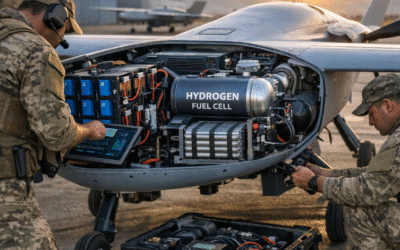
Hydrogen fuel cells are gaining attention due to zero emissions and high energy density, albeit with infrastructure and storage challenges.
D. AI-Driven Power Management
Intelligent power systems optimize propulsion efficiency, enabling real-time switching between electric and fuel power sources for hybrid UAVs.
Selecting the ideal UAV propulsion system is not a one-size-fits-all decision. Electric propulsion systems provide quieter, environmentally friendly, and lower maintenance solutions for short-range and urban applications. Fuel-based propulsion systems, in contrast, excel in endurance, power density, and long-distance missions.
For many modern UAV operators, hybrid systems are emerging as a practical balance between electric efficiency and fuel endurance—especially as battery and fuel technologies evolve.
At UAVPower, we specialize in advancing UAV propulsion technologies that align with your mission demands. Whether your priority is efficiency, range, sustainability, or cost-effectiveness, understanding the tradeoffs between electric and fuel propulsion empowers you to choose the right UAV power solution.

0 Comments