
Long-range unmanned aerial vehicle (UAV) missions place strict demands on propulsion systems. Whether used for intelligence, surveillance and reconnaissance (ISR), mapping, border patrol, maritime monitoring, or infrastructure inspection, long-endurance UAVs must balance fuel efficiency, reliability, payload capacity, and operational flexibility. At the center of these requirements is the UAV engine. High-efficiency UAV engines are not defined by power output alone, but by how effectively they convert energy into sustained flight over extended distances.
This article examines the core design principles, performance characteristics, and application considerations of high-efficiency UAV engines specifically optimized for long-range missions.
Defining High Efficiency in UAV Engines
In long-range UAV operations, efficiency is best evaluated using mission-oriented metrics rather than peak performance figures. Key indicators include:
- Specific fuel consumption (SFC) over cruise conditions
- Power-to-weight ratio, including cooling and exhaust systems
- Operational efficiency across variable altitudes and temperatures
- System integration efficiency, including generators or hybrid components
A high-efficiency UAV engine delivers stable power output while minimizing fuel burn during sustained cruise, rather than prioritizing short-duration maximum thrust.
Engine Types Used in Long-Range UAV Missions
Internal Combustion Engines (ICE)
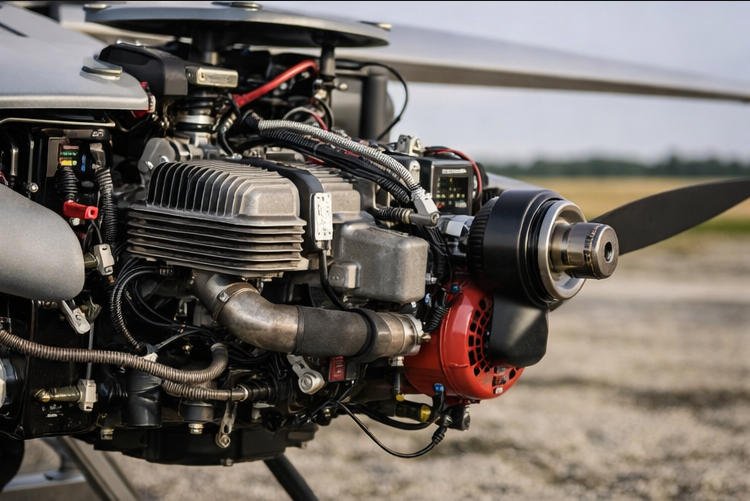
Piston-based internal combustion engines remain widely used for long-range UAVs due to their high energy density and mature fuel infrastructure.
Advantages:
- Excellent endurance for medium to large UAVs
- Compatible with gasoline, heavy fuel, or aviation fuel
- Simple integration with fixed-wing and VTOL hybrid platforms
Efficiency Focus Areas:
- Optimized combustion chamber geometry
- Electronic fuel injection and ignition timing control
- Reduced mechanical friction and thermal losses
Heavy-Fuel UAV Engines
Heavy-fuel engines (HFE), typically operating on Jet-A or diesel-based fuels, are increasingly adopted for military and commercial long-range missions.
Key benefits:
- Improved fuel safety and logistics compatibility
- Better fuel efficiency at cruise RPM
- Enhanced performance at high altitude
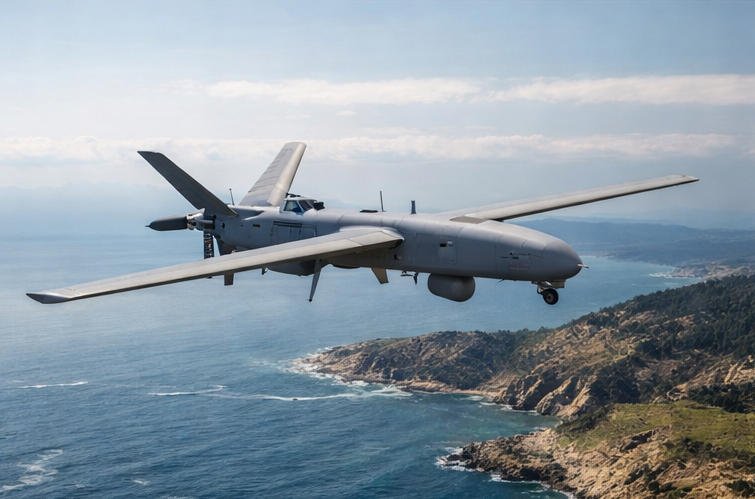
These engines are especially suitable for ISR UAVs requiring extended loiter times.
Hybrid and Range-Extender Engine Configurations
Hybrid propulsion systems combine a combustion engine with electric components to improve overall mission efficiency.
Series Hybrid Systems
- Engine operates at optimal RPM to drive a generator
- Electric motors provide propulsion
- Reduced engine load variation improves fuel efficiency
Parallel Hybrid Systems
- Engine and motor jointly provide propulsion
- Allows power boosting during takeoff and climb
- Engine efficiency is optimized during cruise
Hybrid engines are particularly effective for long-range VTOL UAVs, where vertical takeoff demands high power but cruise flight benefits from low fuel consumption.
Key Design Features of High-Efficiency UAV Engines
Optimized Operating RPM Range
Long-range missions require engines tuned for continuous operation at cruise power, not peak output. Narrowing the optimal RPM band improves fuel efficiency and reduces wear.
Advanced Thermal Management
Efficient cooling systems minimize drag and prevent energy loss. Air-cooled and liquid-cooled systems are designed to maintain stable operating temperatures under long-duration flight.
Lightweight Structural Design
Reducing engine mass directly improves endurance and payload efficiency. High-strength alloys and modular component layouts are commonly used.
Integrated Power Generation
Many long-range UAV engines are designed to drive onboard generators, supplying power to avionics, sensors, and communication systems without additional energy sources.
Performance Metrics for Long-Range Efficiency
When selecting a UAV engine for extended missions, the following metrics are critical:
- Fuel consumption at cruise altitude
- Endurance per unit of fuel
- Maintenance interval under continuous operation
- Altitude performance degradation
- Compatibility with hybrid or generator systems
Engines optimized for long-range missions often sacrifice maximum thrust in favor of consistent, efficient cruise performance.
Application Scenarios
High-efficiency UAV engines are commonly deployed in:
- Long-endurance ISR platforms
- Fixed-wing mapping and surveying UAVs
- Maritime patrol and offshore monitoring
- Pipeline, powerline, and border inspection
- Long-range cargo or communication relay UAVs
Each application benefits from engines designed for reliability, low fuel burn, and stable long-duration operation.
Future Trends in UAV Engine Efficiency
Advancements in UAV engine technology continue to focus on:
- Improved combustion efficiency through electronic control systems
- Greater adoption of hybrid propulsion architectures
- Enhanced materials for reduced weight and thermal resistance
- Modular engine designs supporting multiple UAV configurations
As mission ranges extend and payload demands increase, engine efficiency will remain a primary driver of UAV system performance.

0 Comments